Sen-Sei
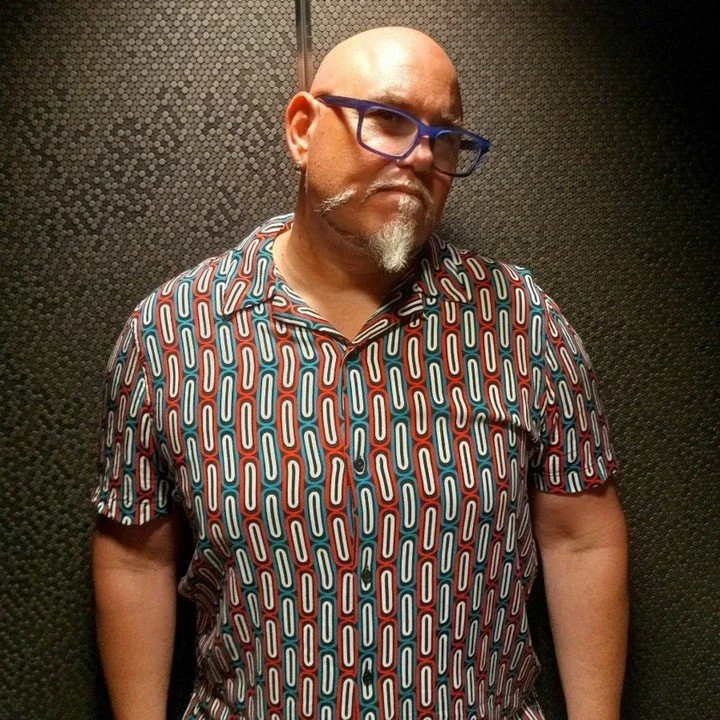
Watch Sen-Sei work a room and you start to lose track of where the record ends and the man begins. A DJ is two or three hours into a mix, a groove has settled in, and suddenly there is a Rhodes line curling through the top end, or a warm B3 organ swelling under the vocal, or a run of Latin percussion pushing the floor forward, all of it in key and in time, and none of it on the record. That is the trick he has spent more than three decades perfecting, and it has made him one of the most distinctive figures in West Coast house.
The roots go back to Brooklyn. He is a Gen-X Brooklynite of Italian and Puerto Rican heritage, an only child raised by a blue-collar father and an immigrant mother who spent more than thirty years in the beauty industry, and a kid who learned early that you had to keep your wits about you. Music arrived just as early. He started classical piano at five, and his teacher pushed him straight into public recitals: first a handful of students and parents in her home studio, then local events, then competitions. By the time the New York and Brooklyn warehouse parties of 1989 introduced him to old-school house, he had twelve years of classical training behind him and had performed at Carnegie Hall. Something clicked in those warehouses, and the classical pianist became a house musician.
In 1991 he settled in San Francisco and started playing out, and he needed a name. He took it from his own: his surname is spelled the same way as the Japanese title for a teacher, and he says he is no teacher, though he does try to educate people in his craft. Those early years put him at the heart of the city's rave and nightclub culture, the scene that became known as the West Coast, the "Left Coast," house sound, and that community has been the centre of his career ever since, even as it took him to play around the world.
What sets him apart from a conventional live PA is that everything is freehand. There are no sequencers. He describes the craft in four steps: find a track with sonic space for a live layer, find or build the right sound to complement it, mix in with one hand while playing with the other and mix out before the DJ moves on, and, most importantly, know when not to play. Sounds are chosen in real time from a laptop running Logic and a deep library of synth plug-ins, but the feel is pure keyboard player, and his stage presence is part of the show.
His first appearance on vinyl came in 1996, and his keys and synth hooks have since turned up on records for more than fifty labels. Highlights include the 1996 anthem "20 Minutes of Disco Glory" with Garth and ETI on Wicked, and "LA Sessions," recorded as Atwater Syndicate for Deep Dish's Yoshitoshi. Along the way he found a long-running partner in David Coleman, with whom he formed Kinetic Grooves in late 1996. Today his production work leans deep, jazzy, soulful and nu-disco, and he says his long game is simple: make as much house music with as many collaborators as possible. He has made peace with the fact that music is not a lucrative business, and says he does it for love.
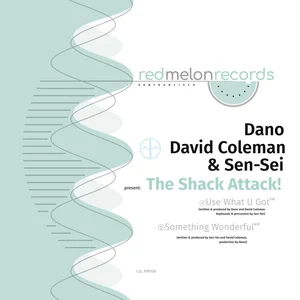
On Red Melon he has been a constant presence. In 2000 he joined Dano and David Coleman as Shack Attack, two deep West Coast cuts, Use What U Got and Something Wonderful, the latter built on a bright electric-piano and organ riff that carries his fingerprints. He played keys and percussion on Use What U Got, played the keys on Show U Love from the Cloud City record Dano made with Halo and Niara, and played keyboards on FreeFormFunk from Dano and Tuhin Roy's Disco Diversions. In 2025 he and Dano reunited for Keep on Dancin', a record full of sunrise vocal chops and muted brass. Across a quarter century, his keys have been one of the warmest threads running through the label's sound.